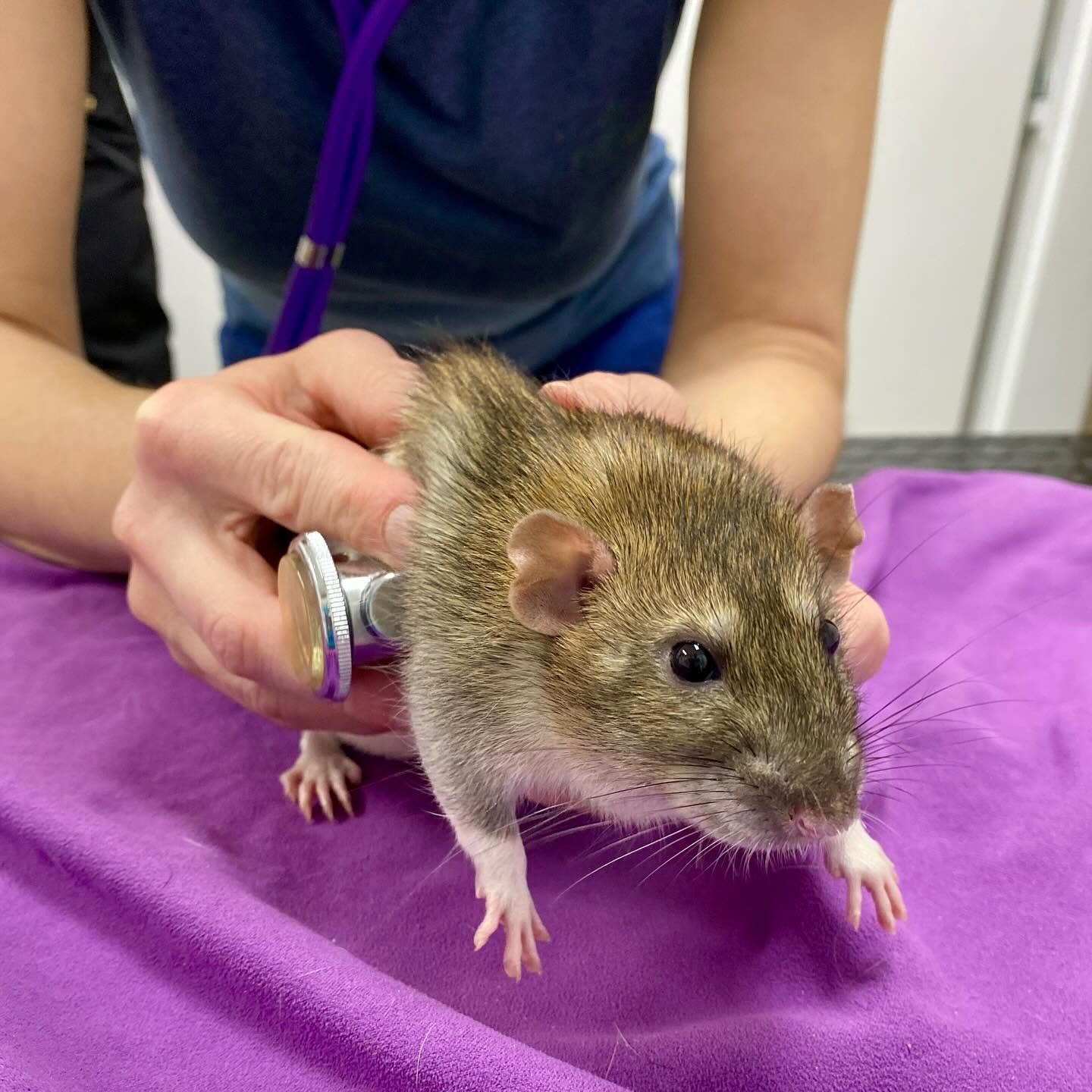
Respiratory Syndrome in Rats – When Your Rat Starts Sneezing
Respiratory diseases are among the most common health issues in pet rats that we manage at the AhojVet veterinary clinic in Bratislava. It is often not an infection caused by a single microorganism, but a multifactorial respiratory syndrome, where infectious agents, the animal’s immunity, and genetic predisposition interact.
The Most Common Culprit: Mycoplasma pulmonis
One of the most significant pathogens responsible for chronic respiratory disease in rats – murine respiratory mycoplasmosis (MRM) – is Mycoplasma pulmonis. This infection is widespread in pet rats, and an individual can be infected without displaying obvious clinical signs.
We also have concrete data from scientific studies on pet rats. Piasecki, Chrzastek, and Kasprzykowska (2017) examined oropharyngeal swabs from 122 pet rats and 113 laboratory rats using the PCR method. M. pulmonis was confirmed in 86 out of 122 pet rats (70.49%), compared to a positivity rate of 49.56% in laboratory rats. An older US survey of 28 pet rat ratteries reported M. pulmonis positivity across all 28 monitored populations.
However, this does not mean every positive rat will become clinically ill. Disease severity is influenced by age, genetic predisposition, immunity, the virulence of the specific mycoplasma strain, ammonia levels, environmental dust, nutrition, stress, and the presence of other respiratory pathogens.
What Does Mycoplasma pulmonis Do in the Lungs?
Mycoplasma pulmonis attaches to the respiratory mucosa, causing chronic inflammation that can progressively damage the bronchi, bronchioles, and the lung tissue itself.
Typical findings include chronic bronchitis and bronchiolitis accompanied by inflammatory infiltration and thickening of the airway walls. In long-standing disease, permanent dilation of the airways – bronchiectasis – and impairment of the natural clearing mechanisms may occur.
In advanced cases, bronchopneumonia, lung atelectasis, and occasionally purulent or necrotic changes can develop. Chronically damaged airways are also more susceptible to secondary bacterial infections.
Importantly, the extent of tissue damage in the lungs does not always match the severity of visible symptoms – even a rat with relatively mild signs may have chronic changes in its respiratory system.
The condition can be significantly exacerbated by other bacteria and viruses, such as Streptococcus pneumoniae, Corynebacterium kutscheri, Filobacterium rodentium (CAR bacillus), Sendai virus, or rat coronavirus.
The chronic stage is therefore characterized by a vicious cycle:
chronic inflammation → epithelial damage → impaired mucociliary clearance → accumulation of secretions → secondary infections → further lung damage
Interestingly, the extent of pathological changes does not always correlate with the severity of clinical signs. A rat may therefore appear relatively healthy despite already having significant alterations in its respiratory tract.
Which Symptoms Should You Notice?
The onset can be very subtle. Typical early signs include sneezing, snuffling, nasal discharge, red-brown secretion around the nose or eyes (porphyrin), decreased activity, loss of appetite, weight loss, and poor coat quality.
As the disease progresses, you may notice rapid or labored breathing, wheezing, rattling, or other audible respiratory sounds. A head tilt can signal secondary involvement of the middle ear.
Dyspnea (shortness of breath), pronounced abdominal breathing, open-mouth breathing, collapse, or cyanotic (bluish) mucous membranes are urgent symptoms requiring immediate medical attention.
How Is the Diagnosis Made?
The veterinarian evaluates the medical history, husbandry conditions, disease progression, clinical signs, and auscultation of the respiratory tract. Depending on the severity, a chest X-ray, thoracic ultrasound, or further laboratory diagnostics may be recommended.
To identify the specific infectious agent, PCR testing or bacterial culture can be utilized. However, the clinical picture alone cannot reliably identify the pathogen, as various respiratory infections can present with almost identical symptoms.
What Can You Do at Home?
At the first mild signs, provide your rat with warmth, rest, minimal stress, and a clean environment free from dust, smoke, perfumes, and aerosols. Remove smelly or dusty bedding and ensure adequate ventilation without drafts. Air temperature and humidity in the housing area are also crucial. Elevated ammonia concentrations from urine are among the primary environmental factors that can worsen respiratory disease.
This article is intended for general information only and does not replace an examination by a veterinarian. If you have any concerns about your dog’s health, please do not hesitate to contact us.